The short answer
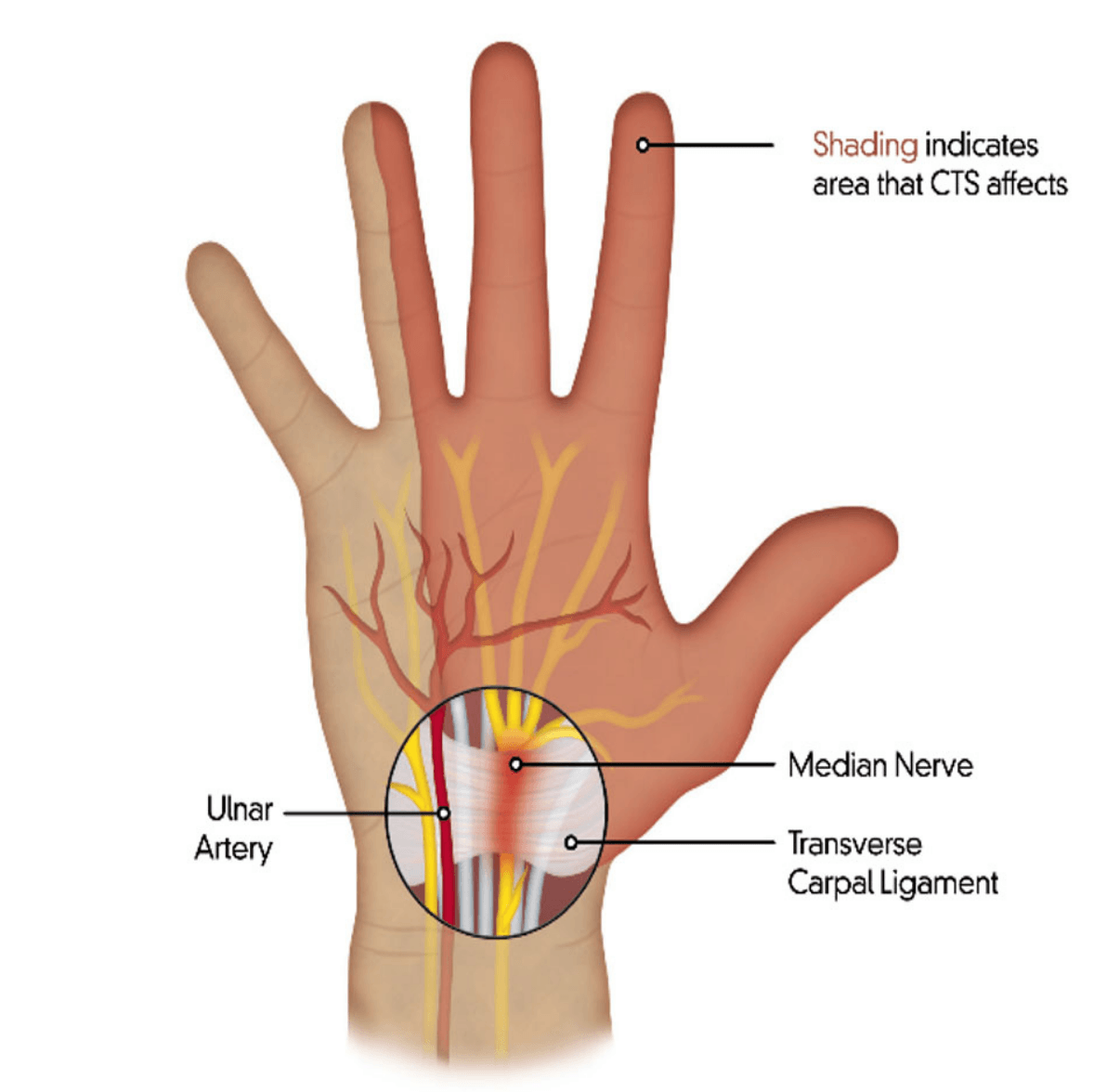
Carpal tunnel syndrome occurs when the median nerve is pinched at the wrist, causing pain, numbness, and tingling in the thumb, index, and middle fingers — often worse at night and with repetitive tasks like typing. Treatment ranges from nerve-glide therapy and night braces to steroid injections, PRP, and ultrasound-guided carpal tunnel release (Sonex).

Medically reviewed by Marc Gruner, DO, MBA, RMSK
Sports medicine physician, Mayo Clinic fellowship. Last reviewed June 2026
Overview
Carpal tunnel syndrome develops when the median nerve is compressed as it passes through the wrist, producing pain, numbness, and tingling in the thumb, index, and middle fingers. Symptoms are often worse at night and with repetitive activities such as typing, and can progress to weakness and dropping objects if untreated.
Dr. Gruner starts with nerve-glide physical therapy and a night brace, adding steroid injections or PRP as needed. For severe or persistent cases, he performs an ultrasound-guided carpal tunnel release (the Sonex SX-One MicroKnife procedure) — minimally invasive, with minimal scarring and a return to activities within five to seven days.
Common symptoms
- Pain in the wrist and hand
- Numbness and tingling in the thumb, index, and middle fingers
- Symptoms worse with typing and at night
- Shaking the hand to relieve tingling; weakness or dropping objects in severe cases
Videos from Dr. Gruner
Ultrasound-Guided Carpal Tunnel Release — Dr. Marc Gruner
Carpal Tunnel Syndrome Symptoms & Tests — Dr. Marc Gruner
Carpal Tunnel Surgery Guide — Dr. Marc Gruner
Carpal Tunnel vs. Arthritis — Important Differences
What to expect at your visit
- 1.
A focused conversation
Dr. Gruner reviews your history, prior imaging, and goals — what you want to get back to doing.
- 2.
Point-of-care ultrasound
When useful, a diagnostic musculoskeletal ultrasound evaluates the injury in real time, with no radiation.
- 3.
A clear, individualized plan
You leave understanding the diagnosis, the non-surgical options, and the expected timeline — in plain language.
Rehabilitation protocol
What to expect week by week after your procedure. Your plan is individualized; follow these alongside your physical therapist.
Ultrasound-Guided Carpal Tunnel Release — Recovery Protocol
The ultrasound-guided carpal tunnel release lets what was once major surgery be done through a tiny incision. Care is tailored to you; these guidelines help you and your therapist.
Before & the day of
Prepare
- NSAIDs (ibuprofen/naproxen) may be used as needed for this procedure
- Avoid alcohol 48 hours before; don't drink while on prescription pain medicine
- Consider stopping tobacco/nicotine — it impairs healing
- No need to fast; arrange a ride home
First few days
Protect the wrist
- Keep the small incision clean and dry
- Elevate the hand to reduce swelling
- Avoid heavy gripping and lifting
Return to activity
Restore function
- Most patients return to normal activities within 3–6 days
- Night/tingling symptoms often improve first; numbness and strength recover over weeks
Clinical evidence
Selected peer-reviewed research supporting these approaches.
Frequently asked questions
- How is carpal tunnel syndrome diagnosed?
- Diagnosis combines a clinical exam, EMG nerve testing, and ultrasound imaging to measure swelling of the median nerve at the wrist.
- Can carpal tunnel be treated without open surgery?
- Yes. Many patients improve with nerve-glide therapy, night braces, steroid injections, or PRP. When a release is needed, Dr. Gruner offers an ultrasound-guided (Sonex) release with minimal scarring and a faster recovery than traditional open surgery.