OrthoBethesda
10215 Fernwood Road, Suite 506Bethesda, MD 20817(301) 530-1010
Diagnostics
The short answer
Diagnostic musculoskeletal (MSK) ultrasound uses high-frequency sound waves to image tendons, ligaments, muscles, nerves, and joints in real time, without radiation. As an RMSK-certified physician, Dr. Gruner uses it to pinpoint the source of pain — often avoiding MRI — and to guide injections and procedures with millimeter precision.

Medically reviewed by Marc Gruner, DO, MBA, RMSK
Sports medicine physician, Mayo Clinic fellowship. Last reviewed June 2026
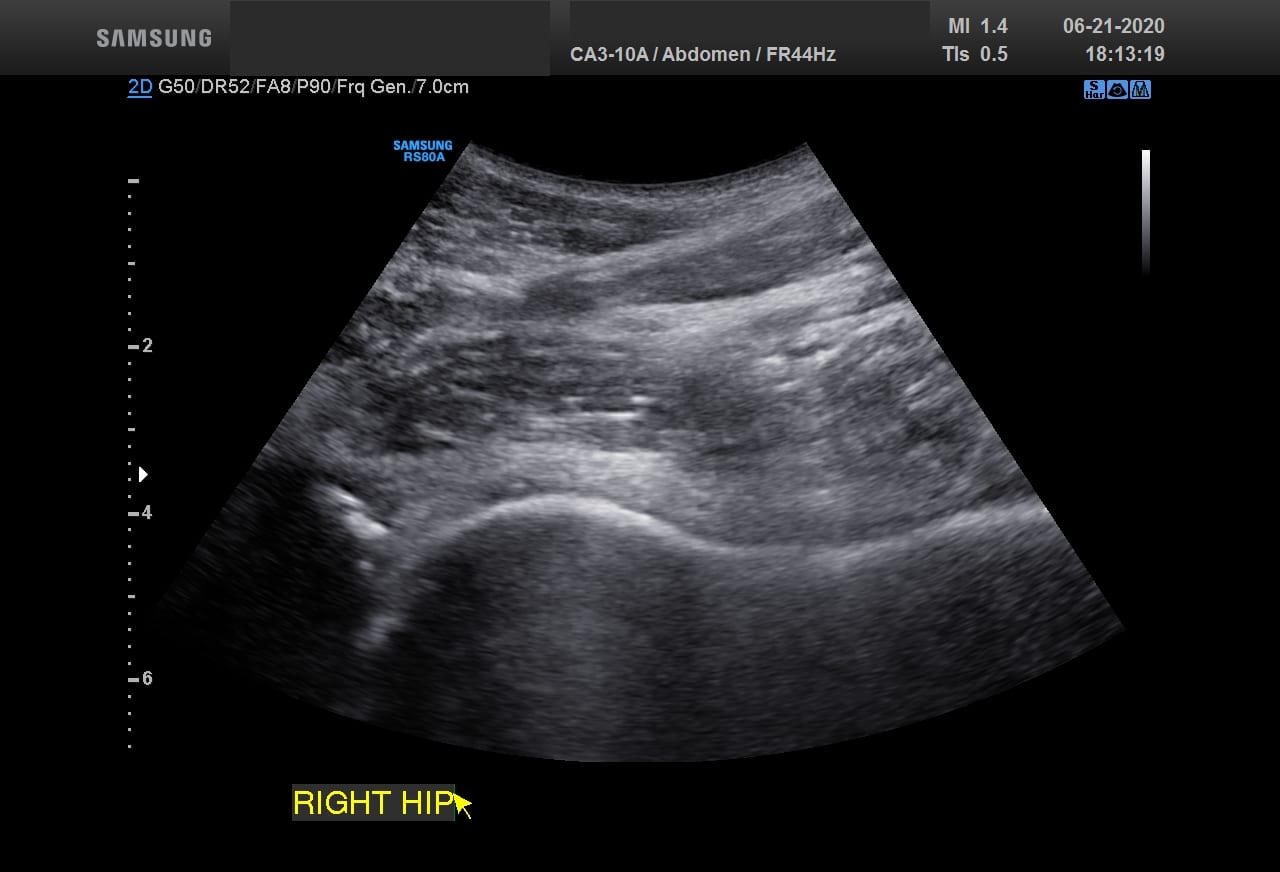
Getting the diagnosis right is the most important step in treating musculoskeletal pain. MSK ultrasound gives Dr. Gruner a dynamic window into the injured tissue — the ability to see it move, compare it side to side, and confirm the exact problem while you’re in the room. That precision shapes every treatment decision that follows.
It’s also what makes his regenerative injections and minimally invasive procedures so accurate: the same imaging that diagnoses the problem guides the needle or instrument to the precise target.
Unlike a static MRI, ultrasound lets Dr. Gruner move the joint and watch tendons, ligaments, and nerves work in real time — often revealing problems a still image misses.
The exam is painless and radiation-free, performed in the office. Diagnosis and a treatment plan frequently happen in a single visit.
For tendon and soft-tissue problems, ultrasound is comparable to MRI for detecting tears, at a fraction of the cost and wait.
The same imaging guides injections and procedures to the exact target while protecting nearby nerves and vessels — far more accurate than injecting by feel.
Schedule a comprehensive evaluation to discuss your non-surgical treatment options.