The short answer
Hamstring tendinopathy is injury to the hamstring tendons where they attach to the sit-bone (ischial tuberosity), often misdiagnosed as ischial bursitis. Common in runners, it causes deep pain at the sit-bone, tenderness, and weakness. Treatment focuses on hamstring strengthening, with cortisone, PRP, or orthobiologic injections for stubborn cases.

Medically reviewed by Marc Gruner, DO, MBA, RMSK
Sports medicine physician, Mayo Clinic fellowship. Last reviewed June 2026
Overview
Hamstring tendinopathy involves injury to the tendons and muscles that attach to the ischial tuberosity (the sit-bone). Often misdiagnosed as ischial bursitis, it results from overuse and micro-damage, and is most common in runners and water-skiers who experience excessive eccentric muscle contractions.
Dr. Gruner confirms the diagnosis with ultrasound or MRI and centers treatment on a hamstring strengthening program. Cortisone into the ischial bursa or ultrasound-guided PRP/orthobiologic injections can help persistent cases, with surgical repair reserved for full tears.
Common symptoms
- Deep pain at the sit-bone
- Tenderness over the tendons
- Weakness with strength testing
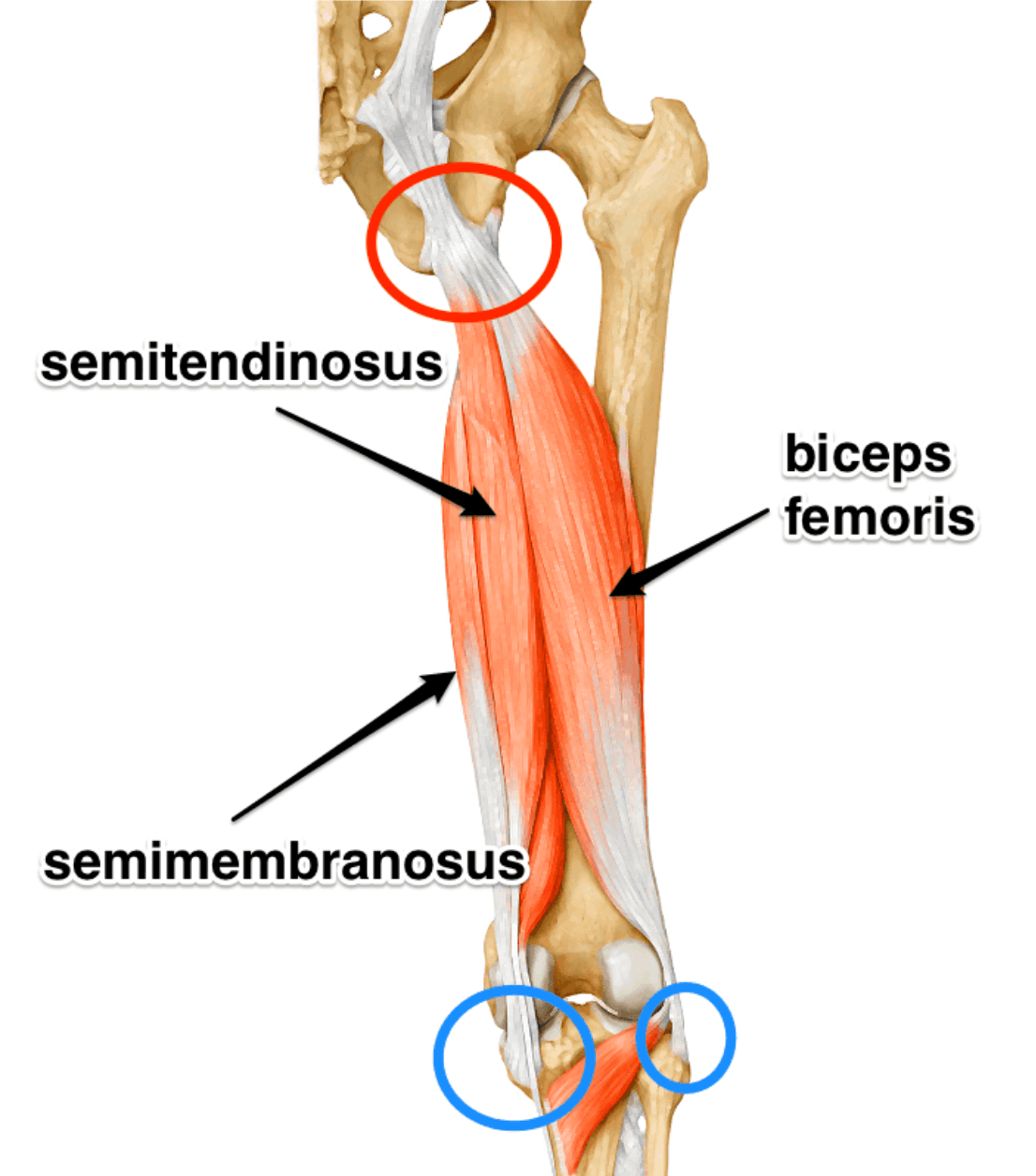
What to expect at your visit
- 1.
A focused conversation
Dr. Gruner reviews your history, prior imaging, and goals — what you want to get back to doing.
- 2.
Point-of-care ultrasound
When useful, a diagnostic musculoskeletal ultrasound evaluates the injury in real time, with no radiation.
- 3.
A clear, individualized plan
You leave understanding the diagnosis, the non-surgical options, and the expected timeline — in plain language.
Rehabilitation protocol
What to expect week by week after your procedure. Your plan is individualized; follow these alongside your physical therapist.
Hip (Hamstring Tendon) — Ultrasound-Guided Lipogems / PRP / Tenex Protocol
Week 1
Protect the tendon
- No weight-bearing 4 days, toe-touch with crutches to day 7
- Gentle hip-flexion ROM; use a seat cushion for comfort
Week 2
Range of motion
- Wean off crutches; no eccentric strengthening
- Begin isometrics, straight-leg raises, heel slides
- Core stability; pool once wound healed
Weeks 3–6
Build strength
- No eccentrics yet; progressive strengthening
- Gentle hamstring stretching; knee-flexion and hip-extension strengthening
- Balance exercises
Weeks 6–12
Return to sport
- Activities as tolerated
- Sport-specific exercises
Do not use NSAIDs (ibuprofen, Aleve, aspirin) for 4 weeks, and avoid ice for the first week — both blunt the healing response. Acetaminophen (Tylenol) is fine for discomfort. Care is tailored to you; use these guidelines with your physical therapist.
Frequently asked questions
- Why does my sit-bone hurt when I run and sit?
- High hamstring tendinopathy causes pain right at the sit-bone that is aggravated by running and prolonged sitting. It's an overuse tendon injury best treated with targeted strengthening and, when needed, PRP.