The short answer
Hip arthritis is deterioration of the cartilage between the femur and pelvis, causing groin pain, stiffness, and difficulty with tasks like getting out of a car or tying shoes. Non-surgical management includes activity modification, weight loss, physical therapy, anti-inflammatories, cortisone injections, and orthobiologics such as PRP and microfragmented fat.

Medically reviewed by Marc Gruner, DO, MBA, RMSK
Sports medicine physician, Mayo Clinic fellowship. Last reviewed June 2026
Overview
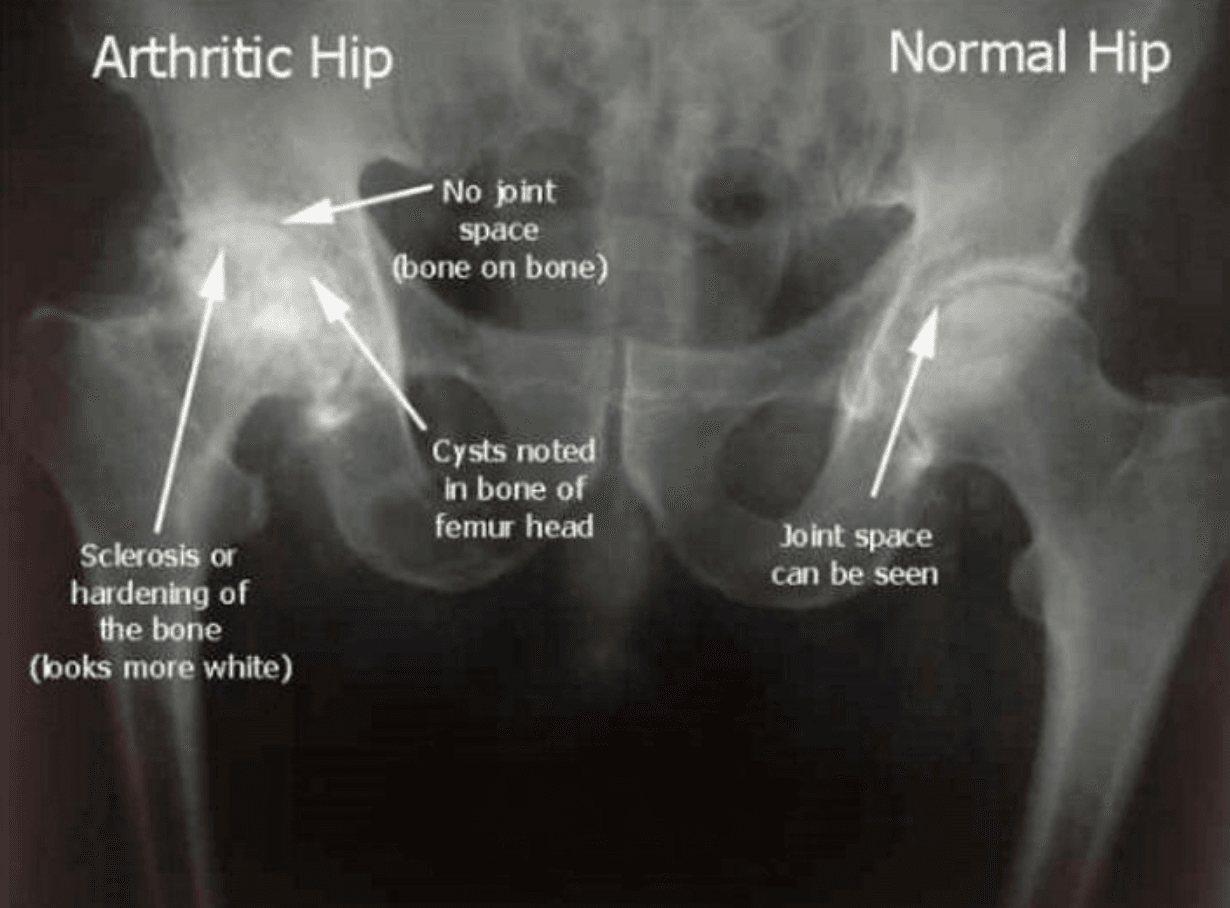
Hip osteoarthritis occurs when cartilage lining the ball-and-socket joint between the femur and pelvis wears down, narrowing the joint and producing pain, swelling, and stiffness. It results from prior trauma, the shape of the hip or pelvis, labral injury, and aging.
Because the joint sits deep in the front of the pelvis, arthritis is usually felt as groin pain rather than over the outer hip. Dr. Gruner emphasizes hip abductor strengthening, weight and activity strategies, and image-guided injections or orthobiologics for appropriate candidates seeking to delay or avoid hip replacement. Cortisone relief tends to be short term, and it should not be repeated more than three times in a year.
Common symptoms
- Groin pain
- Stiffness
- Difficulty getting out of a car
- Difficulty tying shoes
Videos from Dr. Gruner
Hip Arthritis & Ultrasound-Guided Treatment — Dr. Marc Gruner
What to expect at your visit
- 1.
A focused conversation
Dr. Gruner reviews your history, prior imaging, and goals — what you want to get back to doing.
- 2.
Point-of-care ultrasound
When useful, a diagnostic musculoskeletal ultrasound evaluates the injury in real time, with no radiation.
- 3.
A clear, individualized plan
You leave understanding the diagnosis, the non-surgical options, and the expected timeline — in plain language.
Rehabilitation protocol
What to expect week by week after your procedure. Your plan is individualized; follow these alongside your physical therapist.
Knee & Hip Joint — Ultrasound-Guided PRP / Adipose / BMAC Injection Protocol
Day 1–2
Protect the joint
- Weight-bear as tolerated; crutches as needed
- Keep bandage dry; no submerging for 72 hours
- Gentle ROM as tolerated; monitor wound
Day 3–7
Begin gentle loading
- Avoid excessive joint loading
- Start low-grade closed-chain program
- Light squats/lunges (bodyweight); optional BFR
Day 8–14
Add resistance
- Avoid impact and heavy lifting to the joint
- Light open-chain exercises; add resistance as tolerated
- May begin swimming and low-resistance biking
Day 14–28
Functional progression
- Avoid impact activities
- Progress functional program; light agility and proprioception
- Resume light aerobic activity (walking)
Beyond 28 days
Long-term prevention
- Establish a long-term home exercise program
- Correct biomechanical issues that contributed to the injury
Do not use NSAIDs (ibuprofen, Aleve, aspirin) for 4 weeks, and avoid ice for the first week — both blunt the healing response. Acetaminophen (Tylenol) is fine for discomfort. Care is tailored to you; use these guidelines with your physical therapist.
Clinical evidence
Selected peer-reviewed research supporting these approaches.
Frequently asked questions
- How can I avoid or delay a hip replacement?
- A structured program of physical therapy, weight and activity management, anti-inflammatories, and image-guided injections or orthobiologics (PRP, microfragmented fat) can reduce pain and maintain function, often delaying the need for surgery.
- Why does hip arthritis cause groin pain?
- The hip joint sits deep in the front of the pelvis, so arthritis is commonly felt in the groin rather than the outer hip. Outer-hip pain more often comes from gluteal tendinopathy or bursitis — which is why an accurate diagnosis matters.