The short answer
The rotator cuff is four muscles and tendons that stabilize the shoulder; the supraspinatus is most often injured, from overuse or a fall. Tears range from partial to complete and cause shoulder pain and night pain. Many partial tears respond to physical therapy, cortisone, PRP, or microfragmented fat; large full-thickness tears may need repair.
Medically reviewed by Marc Gruner, DO, MBA, RMSK
Sports medicine physician, Mayo Clinic fellowship. Last reviewed June 2026
Overview
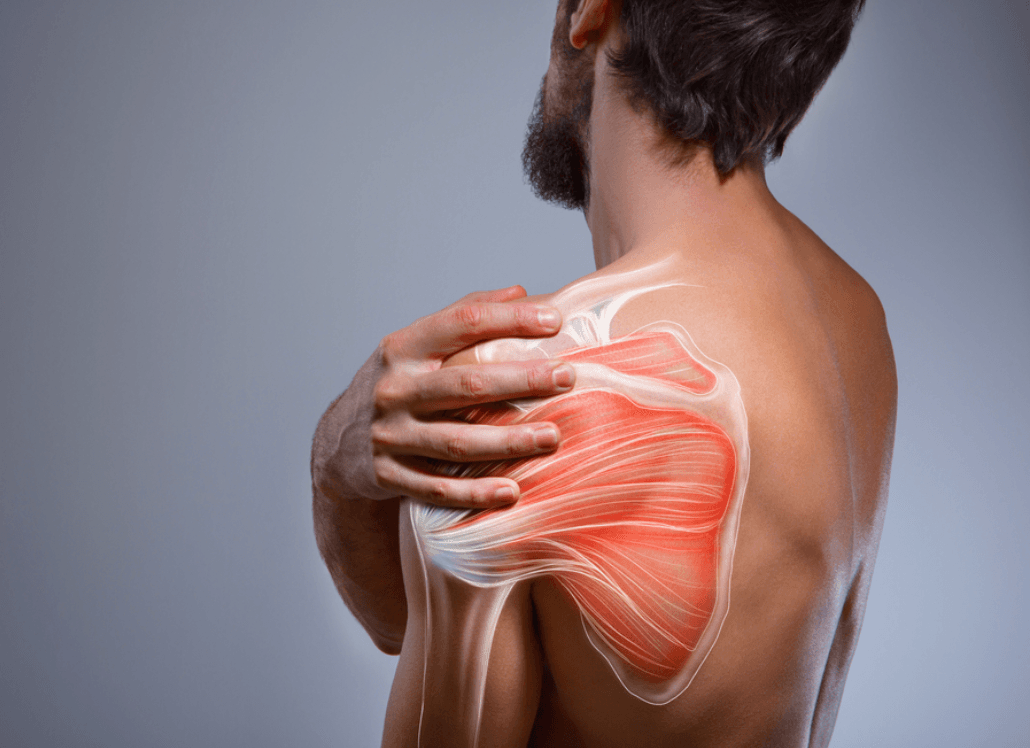
The rotator cuff is a group of four muscles and tendons that stabilize the shoulder joint. These tendons — most commonly the supraspinatus — are frequently injured by overuse or a fall, producing tears that range from partial to complete.
Not every tear needs surgery. Dr. Gruner uses ultrasound to characterize the tear and guides treatment accordingly: rotator cuff strengthening, cortisone into the subacromial bursa, and ultrasound-guided orthobiologics such as PRP or microfragmented fat for select partial tears, reserving surgical repair for larger full-thickness tears.
Common symptoms
- Pain on top of the shoulder
- Pain at night
- Weakness lifting the arm
- Painful overhead motion
What to expect at your visit
- 1.
A focused conversation
Dr. Gruner reviews your history, prior imaging, and goals — what you want to get back to doing.
- 2.
Point-of-care ultrasound
When useful, a diagnostic musculoskeletal ultrasound evaluates the injury in real time, with no radiation.
- 3.
A clear, individualized plan
You leave understanding the diagnosis, the non-surgical options, and the expected timeline — in plain language.
Rehabilitation protocol
What to expect week by week after your procedure. Your plan is individualized; follow these alongside your physical therapist.
Shoulder — Ultrasound-Guided Lipogems / PRP Protocol
Week 1
Protect, reduce pain and swelling
- Sling for 7 days; begin weaning after day 3
- No lifting > 5 lbs; avoid overhead activity 2 weeks
- Don't sleep on the procedure side
- Begin gentle active ROM (pendulums) 4×/day
Week 2
Begin active range of motion
- No lifting > 10 lbs; avoid overhead activity
- Continue AROM and PROM
- Begin isometrics and thoracic mobility
- Stop any exercise if pain > 4/10
Weeks 3–6
Shoulder strengthening
- May lift 10–20 lbs; avoid eccentrics
- Continue active ROM
- Progressive strengthening
Weeks 6–12
Return to sport
- Activities as tolerated
- Begin eccentric training/loading
- Sport-specific exercises
Do not use NSAIDs (ibuprofen, Aleve, aspirin) for 4 weeks, and avoid ice for the first week — both blunt the healing response. Acetaminophen (Tylenol) is fine for discomfort. Care is tailored to you; use these guidelines with your physical therapist.
Clinical evidence
Selected peer-reviewed research supporting these approaches.
Frequently asked questions
- Do I need surgery for a rotator cuff tear?
- Not always. Many partial-thickness tears and tendinopathy respond to physical therapy, cortisone injections, and orthobiologics such as PRP or microfragmented fat. Surgery is more often considered for large, full-thickness tears or when function doesn't improve.
- How do I know if I have a rotator cuff tear?
- Common signs are pain on top of the shoulder and pain at night, often with weakness lifting the arm. A focused exam plus diagnostic ultrasound can confirm the tear at the point of care.