The short answer
Plantar fasciopathy is overuse micro-damage to the plantar fascia along the bottom of the foot — degeneration rather than pure inflammation. It causes heel pain that is worst with the first morning steps and loosens with activity. Treatment includes load management, stretching, orthotics, shockwave, physical therapy, and — for resistant cases — ultrasound-guided PRP or Tenex.

Medically reviewed by Marc Gruner, DO, MBA, RMSK
Sports medicine physician, Mayo Clinic fellowship. Last reviewed June 2026
Overview
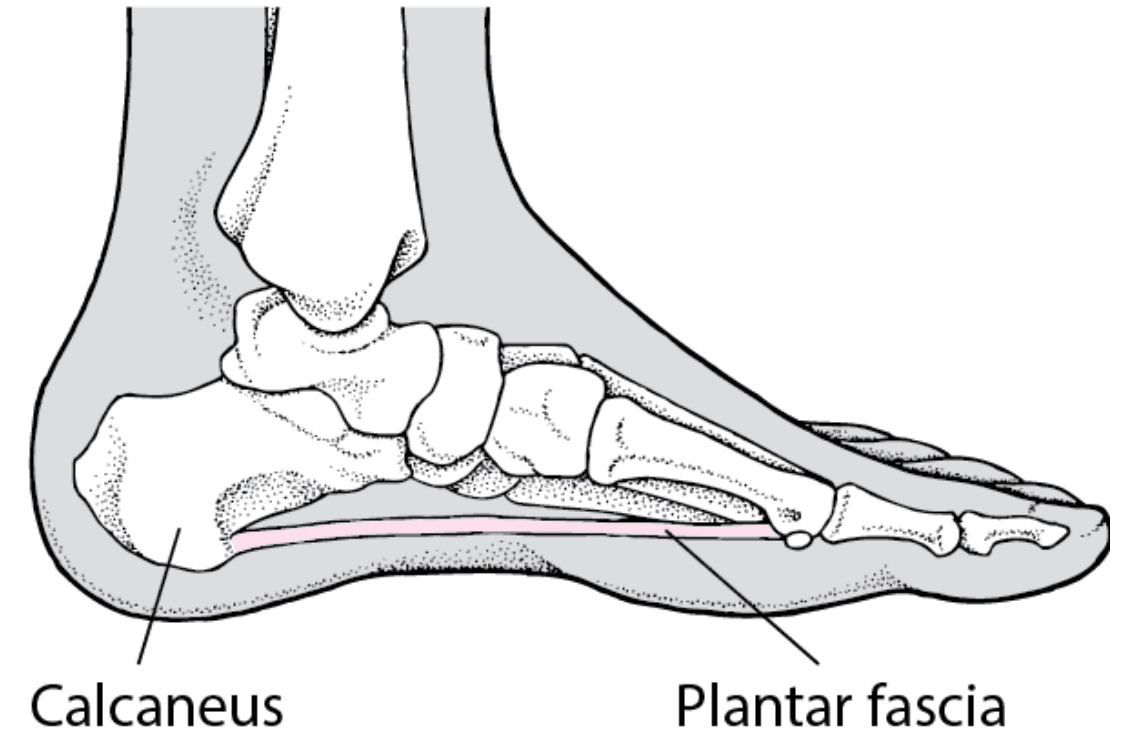
The plantar fascia is the connective tissue that runs from the heel to the muscles of the foot and supports the arch. Plantar fasciopathy results from overuse and micro-damage — degeneration rather than the inflammation once assumed — which is why it can be so stubborn. The hallmark is heel pain that is worst with the first steps in the morning and eases as the tissue warms up.
Dr. Gruner combines rest and activity modification, calf and fascia stretching, orthotics or heel cups, gait modification, shockwave therapy, and foot-intrinsic strengthening. Ultrasound-guided cortisone (placed via the side of the foot), PRP, or a Tenex procedure help resistant cases, with surgery a last resort.
Common symptoms
- Sharp heel pain with the first steps in the morning
- Pain that loosens with exercise
- Pain after long standing or activity
- Tenderness at the bottom of the heel
What to expect at your visit
- 1.
A focused conversation
Dr. Gruner reviews your history, prior imaging, and goals — what you want to get back to doing.
- 2.
Point-of-care ultrasound
When useful, a diagnostic musculoskeletal ultrasound evaluates the injury in real time, with no radiation.
- 3.
A clear, individualized plan
You leave understanding the diagnosis, the non-surgical options, and the expected timeline — in plain language.
Rehabilitation protocol
What to expect week by week after your procedure. Your plan is individualized; follow these alongside your physical therapist.
Foot (Plantar Fascia) — Ultrasound-Guided Tenotomy / PRP Protocol
Week 1
Protect, reduce pain and swelling
- Non-weight-bearing with crutches in a CAM boot
- Avoid stretching into dorsiflexion; rest and elevate
- Gentle active ankle ROM; day 4 begin isometrics (toe crunches)
Week 2
Restore ROM, progress weight bearing
- Partial weight-bearing in CAM boot (pain-limited)
- Core and non-weight-bearing lower-limb strengthening
- Optional BFR
Weeks 2–4
Restore mechanics and tolerance
- Week 3: weight-bear as tolerated in boot, crutches as needed
- Gentle ankle dorsiflexion stretching; isometric ankle strengthening
- Non-impact aerobic exercise
Do not use NSAIDs (ibuprofen, Aleve, aspirin) for 4 weeks, and avoid ice for the first week — both blunt the healing response. Acetaminophen (Tylenol) is fine for discomfort. Care is tailored to you; use these guidelines with your physical therapist.
Clinical evidence
Selected peer-reviewed research supporting these approaches.
- Safety and Efficacy of Intra-articular Injection of Platelet-Rich Plasma in Patients With Ankle OsteoarthritisPubMed 28399635
- Intra-articular Injections in the Treatment of Symptoms from Ankle Arthritis: A Systematic ReviewPubMed 29909689
- Platelet rich plasma therapy versus other modalities for treatment of plantar fasciitis: A systematic review and meta-analysisPubMed 38395675
- Platelet-Rich Plasma Versus Corticosteroids for Plantar Fasciitis: A Systematic Review of Randomized Controlled TrialsPubMed 32426407
- Utility of Percutaneous Ultrasonic Tenotomy for Tendinopathies: A Systematic ReviewPubMed 33252310
- Retrospective Evaluation of Ultrasound Guided Percutaneous Plantar Fasciotomy With and Without Platelet Rich PlasmaPubMed 38043602
- A novel treatment for refractory plantar fasciitisPubMed 25750942
Frequently asked questions
- Why won't my plantar fasciitis go away?
- Chronic plantar fasciopathy is tissue degeneration, not simple inflammation, so rest alone doesn't resolve it. It needs targeted loading, footwear and gait management, and sometimes ultrasound-guided PRP or a Tenex procedure to support healing.
- Does PRP help plantar fasciitis?
- For chronic plantar fasciopathy that hasn't responded to conservative care, ultrasound-guided PRP can reduce pain and support healing of the fascia.