The short answer
The Tenex procedure is a minimally invasive percutaneous tenotomy that uses ultrasonic energy to break up and remove damaged, scarred tendon tissue through a tiny opening. Performed under ultrasound guidance with local anesthesia, it treats chronic tendinopathy — tennis elbow, rotator cuff, patellar and Achilles tendon pain — with recovery in about 4–6 weeks and no stitches.
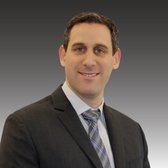
Medically reviewed by Marc Gruner, DO, MBA, RMSK
Sports medicine physician, Mayo Clinic fellowship. Last reviewed June 2026
Tendon Scraping and Tenex Treatments — Dr. Marc Gruner
How it works
Tenex (percutaneous tenotomy) targets the degenerated scar tissue that drives chronic tendon pain. Through a very small opening, the Tenex tool uses ultrasonic energy to break up and remove the damaged tissue under live ultrasound guidance, leaving the healthy tendon intact.
Ideal candidates have already tried injections, rest, immobilization, and physical therapy without lasting relief. Because it is minimally invasive, there is no scarring, no stitches (just a bandage), minimal to no pain during treatment, and a return to normal tendon function typically within 4–6 weeks — a faster, lower-risk alternative to open surgery.
Why patients choose it
- Minimally invasive — no incision or stitches
- Ultrasound-guided precision
- Removes damaged tissue while preserving the tendon
- Recovery typically in 4–6 weeks
What to expect at your visit
- 1.
A focused conversation
Dr. Gruner reviews your history, prior imaging, and goals — what you want to get back to doing.
- 2.
Point-of-care ultrasound
When useful, a diagnostic musculoskeletal ultrasound evaluates the injury in real time, with no radiation.
- 3.
A clear, individualized plan
You leave understanding the diagnosis, the non-surgical options, and the expected timeline — in plain language.
Before and after your procedure
- How do I prepare for the Tenex procedure?
- Hold NSAIDs and, when advised, blood thinners beforehand, eat before your appointment, and arrange a ride if sedation is used. Dr. Gruner reviews specific instructions and confirms you've completed appropriate conservative care first.
- What is aftercare and recovery like after Tenex?
- The tiny opening is closed with a bandage (no stitches) — keep it clean and dry as directed, typically for about 24–48 hours. Expect mild soreness. Most patients modify activity for a short period and recover over roughly 4–6 weeks, following Dr. Gruner's graded loading plan.
- When can I return to work or sport after Tenex?
- Desk work is often possible within a day or two; return to sport is typically progressive over 4–6 weeks depending on the tendon treated. Dr. Gruner gives you a specific timeline.
Rehabilitation protocols
What to expect week by week after your procedure. Your plan is individualized; follow these alongside your physical therapist.
After Your Tenex Procedure — Instructions
You may have 3–6 hours of numbness from the local anesthetic; some pain is normal once it wears off. Restrictions are followed until your 1-week follow-up.
First 24 hours
Immediate care
- Keep bandages and the procedure area clean and dry for 1 week
- Ice up to 20 minutes as needed for discomfort
- Have someone drive you home
First 5 days
Protect the site
- Avoid submerging the area (swimming/bathing) for 5 days
- Regular showers are fine once cleared
By body area (until 1-week follow-up)
Area-specific restrictions
- Elbow tendons: wear the sling during the day for 3 days (no driving in it), then at night/for comfort
- Follow the specific restrictions for your injection site
Contact the office if
Warning signs
- Redness or warmth, increasing pain or swelling, drainage, or fever
Elbow — Ultrasound-Guided Tenotomy / PRP Protocol
Week 0–1
Protect, reduce pain and swelling
- Sling for 3 days; no driving in sling
- May lift up to 5 lbs; rest and elevate
- Begin gentle active ROM 4×/day on day 3
- Optional blood-flow-restriction (BFR) training 2×/week
Weeks 1–2
Restore full range of motion
- May lift up to 10 lbs
- Avoid repetitive elbow/hand activity and sustained gripping
- Regain full ROM 3–5×/day
Weeks 2–4
Begin strengthening
- May lift up to 20 lbs
- Begin isometric wrist/elbow strengthening
- Week 3: add light wrist flexion/extension weight (~2 lbs)
Weeks 4–6
Build strength and function
- Progress isotonic strengthening
- Integrated strengthening (chest press, rows, hammer curls)
- Begin eccentric training
Weeks 6+
Return to sport
- Continue strengthening
- Sport-specific and progressive loading exercises
Do not use NSAIDs (ibuprofen, Aleve, aspirin) for 4 weeks, and avoid ice for the first week — both blunt the healing response. Acetaminophen (Tylenol) is fine for discomfort. Care is tailored to you; use these guidelines with your physical therapist.
Knee (Quad / Patellar Tendon) — Ultrasound-Guided PRP / Tenotomy Protocol
Week 0–1
Protect, reduce pain and swelling
- Non-weight-bearing with crutches ~4 days; knee immobilizer 1 week
- Begin gentle active knee ROM
- Gait training with crutches
Weeks 1–2
Restore ROM, progress weight bearing
- Continue knee ROM
- Begin core and lower-limb strengthening
- Upper-body aerobic/strength work; optional BFR
Weeks 2–4
Improve strength and tendon tolerance
- Begin isometric knee strengthening
- Joint mobilizations as needed
- Non-impact aerobic (bike); pool once incision healed
Weeks 4–6
Normalize gait, add balance
- Progress knee strengthening
- Initiate balance/proprioception
Weeks 6–8 (return to play)
Gradual return to sport
- No painful activities; no soreness > 24 hrs; no pain with running
- Gradual return to sport activities
Do not use NSAIDs (ibuprofen, Aleve, aspirin) for 4 weeks, and avoid ice for the first week — both blunt the healing response. Acetaminophen (Tylenol) is fine for discomfort. Care is tailored to you; use these guidelines with your physical therapist.
Achilles Tendon — Ultrasound-Guided Tenotomy / PRP Protocol
Week 0–1
Protect, reduce pain and swelling
- Non-weight-bearing with crutches in a CAM boot
- Gentle active ankle ROM; gait training with crutches
- Optional BFR 0–2 weeks
Weeks 1–2
Restore ROM, minimize atrophy
- Partial weight-bearing in CAM boot (pain-limited)
- Core and non-weight-bearing lower-limb strengthening
- Upper-body aerobic/strength work
Weeks 2–4
Progress weight bearing
- Continue weight-bearing progression
- Restore normal joint mechanics
- Increase tendon tolerance to daily activities
Do not use NSAIDs (ibuprofen, Aleve, aspirin) for 4 weeks, and avoid ice for the first week — both blunt the healing response. Acetaminophen (Tylenol) is fine for discomfort. Care is tailored to you; use these guidelines with your physical therapist.
Foot (Plantar Fascia) — Ultrasound-Guided Tenotomy / PRP Protocol
Week 1
Protect, reduce pain and swelling
- Non-weight-bearing with crutches in a CAM boot
- Avoid stretching into dorsiflexion; rest and elevate
- Gentle active ankle ROM; day 4 begin isometrics (toe crunches)
Week 2
Restore ROM, progress weight bearing
- Partial weight-bearing in CAM boot (pain-limited)
- Core and non-weight-bearing lower-limb strengthening
- Optional BFR
Weeks 2–4
Restore mechanics and tolerance
- Week 3: weight-bear as tolerated in boot, crutches as needed
- Gentle ankle dorsiflexion stretching; isometric ankle strengthening
- Non-impact aerobic exercise
Do not use NSAIDs (ibuprofen, Aleve, aspirin) for 4 weeks, and avoid ice for the first week — both blunt the healing response. Acetaminophen (Tylenol) is fine for discomfort. Care is tailored to you; use these guidelines with your physical therapist.
Clinical evidence
Selected peer-reviewed research supporting these approaches.
Frequently asked questions
- Who is a good candidate for the Tenex procedure?
- Patients with chronic tendon pain who have already tried injections, rest, immobilization, and physical therapy without relief. Dr. Gruner confirms suitability with an ultrasound exam.