The short answer
PRP + protein concentrate combines platelet-rich plasma with a concentrated preparation of your own anti-inflammatory and regenerative proteins. Injected under ultrasound guidance, this enhanced orthobiologic aims to deliver a stronger, longer-acting healing signal than standard PRP for select cases of osteoarthritis and tendon injury.
Medically reviewed by Marc Gruner, DO, MBA, RMSK
Sports medicine physician, Mayo Clinic fellowship. Last reviewed June 2026
How it works
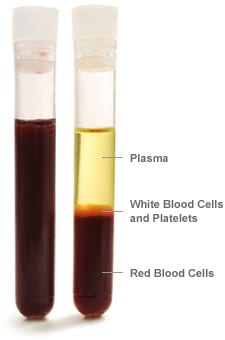
PRP + protein concentrate builds on standard platelet-rich plasma by adding a concentrated preparation of your own blood-derived proteins — including anti-inflammatory and regenerative signaling molecules. Both are prepared from a simple blood draw and injected together under ultrasound guidance.
The goal is a more robust and durable healing response for appropriate candidates with osteoarthritis or chronic tendon injury. Dr. Gruner reviews your diagnosis and goals to determine whether this enhanced orthobiologic is a good fit.
Why patients choose it
- Enhanced version of standard PRP
- Uses only your own blood-derived material
- Ultrasound-guided, outpatient procedure
- Aims for a stronger, longer-acting healing signal
How to prepare for your procedure
Following these steps gives your treatment the best chance to work. If anything here conflicts with another physician’s instructions, call the office before changing anything.
- 1.
Stop anti-inflammatories 2 weeks before — and 4 weeks after
Stop NSAIDs such as ibuprofen, naproxen, and similar anti-inflammatories two weeks before your procedure and for four weeks afterward. Orthobiologics work by triggering your body's own healing response, and anti-inflammatories blunt exactly that process. Do not stop prescribed aspirin, blood thinners, or any other prescription medication without checking with Dr. Gruner or the prescribing physician first.
- 2.
Have physical therapy scheduled
Make sure physical therapy is lined up before your procedure — rehabilitation is what converts the biology into lasting function. If you have Medicare, we'll get you set up on a remote monitoring platform so your progress is tracked between visits.
- 3.
Complete your outcome measures beforehand
You'll receive short outcome-measure surveys by email before your visit. Please complete them ahead of time — they establish your baseline so we can objectively measure how much you improve.
- 4.
Arrive 1 hour before your procedure
Plan to arrive a full hour ahead. That gives us time to check you in, complete the preparation, draw and process your sample, and get you positioned without anything feeling rushed.
- 5.
Bring athletic attire
Bring workout clothes. You'll spend a short time exercising on a bike before your blood draw — this mobilizes your platelets so we can collect the highest concentration possible for your treatment.
What to expect at your visit
- 1.
A focused conversation
Dr. Gruner reviews your history, prior imaging, and goals — what you want to get back to doing.
- 2.
Point-of-care ultrasound
When useful, a diagnostic musculoskeletal ultrasound evaluates the injury in real time, with no radiation.
- 3.
A clear, individualized plan
You leave understanding the diagnosis, the non-surgical options, and the expected timeline — in plain language.
Before and after your procedure
- How do I prepare for PRP + protein concentrate?
- Preparation mirrors standard PRP: stop NSAIDs (and, when advised, aspirin/blood thinners) about 1–2 weeks before, hydrate well, and eat beforehand. Dr. Gruner will confirm which medications to hold.
- What is aftercare like for PRP + protein concentrate?
- Expect soreness for several days as healing begins. Avoid anti-inflammatory medications for about 4 weeks and ice for the first week, use acetaminophen for discomfort, and follow the activity timeline Dr. Gruner provides. Benefits build gradually over several weeks.
Rehabilitation protocols
What to expect week by week after your procedure. Your plan is individualized; follow these alongside your physical therapist.
Shoulder — Ultrasound-Guided Lipogems / PRP Protocol
Week 1
Protect, reduce pain and swelling
- Sling for 7 days; begin weaning after day 3
- No lifting > 5 lbs; avoid overhead activity 2 weeks
- Don't sleep on the procedure side
- Begin gentle active ROM (pendulums) 4×/day
Week 2
Begin active range of motion
- No lifting > 10 lbs; avoid overhead activity
- Continue AROM and PROM
- Begin isometrics and thoracic mobility
- Stop any exercise if pain > 4/10
Weeks 3–6
Shoulder strengthening
- May lift 10–20 lbs; avoid eccentrics
- Continue active ROM
- Progressive strengthening
Weeks 6–12
Return to sport
- Activities as tolerated
- Begin eccentric training/loading
- Sport-specific exercises
Do not use NSAIDs (ibuprofen, Aleve, aspirin) for 4 weeks, and avoid ice for the first week — both blunt the healing response. Acetaminophen (Tylenol) is fine for discomfort. Care is tailored to you; use these guidelines with your physical therapist.
Knee & Hip Joint — Ultrasound-Guided PRP / Adipose / BMAC Injection Protocol
Day 1–2
Protect the joint
- Weight-bear as tolerated; crutches as needed
- Keep bandage dry; no submerging for 72 hours
- Gentle ROM as tolerated; monitor wound
Day 3–7
Begin gentle loading
- Avoid excessive joint loading
- Start low-grade closed-chain program
- Light squats/lunges (bodyweight); optional BFR
Day 8–14
Add resistance
- Avoid impact and heavy lifting to the joint
- Light open-chain exercises; add resistance as tolerated
- May begin swimming and low-resistance biking
Day 14–28
Functional progression
- Avoid impact activities
- Progress functional program; light agility and proprioception
- Resume light aerobic activity (walking)
Beyond 28 days
Long-term prevention
- Establish a long-term home exercise program
- Correct biomechanical issues that contributed to the injury
Do not use NSAIDs (ibuprofen, Aleve, aspirin) for 4 weeks, and avoid ice for the first week — both blunt the healing response. Acetaminophen (Tylenol) is fine for discomfort. Care is tailored to you; use these guidelines with your physical therapist.
Elbow — Ultrasound-Guided Tenotomy / PRP Protocol
Week 0–1
Protect, reduce pain and swelling
- Sling for 3 days; no driving in sling
- May lift up to 5 lbs; rest and elevate
- Begin gentle active ROM 4×/day on day 3
- Optional blood-flow-restriction (BFR) training 2×/week
Weeks 1–2
Restore full range of motion
- May lift up to 10 lbs
- Avoid repetitive elbow/hand activity and sustained gripping
- Regain full ROM 3–5×/day
Weeks 2–4
Begin strengthening
- May lift up to 20 lbs
- Begin isometric wrist/elbow strengthening
- Week 3: add light wrist flexion/extension weight (~2 lbs)
Weeks 4–6
Build strength and function
- Progress isotonic strengthening
- Integrated strengthening (chest press, rows, hammer curls)
- Begin eccentric training
Weeks 6+
Return to sport
- Continue strengthening
- Sport-specific and progressive loading exercises
Do not use NSAIDs (ibuprofen, Aleve, aspirin) for 4 weeks, and avoid ice for the first week — both blunt the healing response. Acetaminophen (Tylenol) is fine for discomfort. Care is tailored to you; use these guidelines with your physical therapist.
Frequently asked questions
- How is PRP + protein concentrate different from regular PRP?
- It combines standard PRP with an additional concentrated protein preparation intended to amplify and prolong the healing signal. Dr. Gruner will advise whether standard PRP or the enhanced version is more appropriate for your case.